
A child can know how to read a book, solve a maths problem, and finish their homework and still struggle with something much harder:
Knowing what to do when they feel angry, worried, left out, or overwhelmed.
Think about a child who comes home after a difficult day at school.
Maybe a friend didn’t include them at lunch. Maybe they were nervous about answering a question in class. Maybe they made a mistake and felt embarrassed.
When you ask, “How was school?”
They say, “Fine.”
But later, they lose their temper over something very small.
As parents, we often see the reaction without knowing what happened before it.
This is where emotional and social skills become so important.
Children Need More Than Academic Skills
We spend a lot of time teaching children how to succeed academically.
But who teaches them what to do when they feel overwhelmed?
How do they learn to calm themselves after an argument?
How do they tell a friend, “That hurt my feelings”?
How do they handle losing a game without feeling like a failure?
These are skills too.
Social emotional learning helps children understand their emotions, manage their reactions, build healthy relationships, make thoughtful decisions, and develop a stronger sense of themselves.
And these skills don’t develop overnight.
Children learn them through practice, guidance, and safe opportunities to make mistakes.
When Big Feelings Become Difficult to Manage
Imagine a child getting frustrated while doing homework.
They make a mistake.
They crumple the paper.
You tell them to try again.
They shout, “I can’t!”
A few minutes later, everyone in the house is frustrated.
It can be tempting to focus on the behaviour and say, “Stop overreacting.”
But the child may not yet know how to handle frustration.
They need to learn what to do before the frustration becomes an explosion.
That is where coping skills can make a real difference.
Relaxation Coping Skills for Kids
Children don’t need complicated techniques to calm their bodies and minds.
Simple activities can help them recognise when they are becoming overwhelmed and give them something positive to do.
Depending on the child, this might include:
- Taking slow, deep breaths
- Stretching or gentle movement
- Guided imagery
- Mindfulness activities
- Taking a short quiet break
- Drawing or creative activities
- Listening to calming sounds
- Talking about what they are feeling
The important part is not simply teaching a child a technique.
They need to understand when to use it.
A child who learns to notice, “My body is getting tense and I’m getting really angry,” is already taking an important step.
They can then pause, breathe, and choose what to do next.
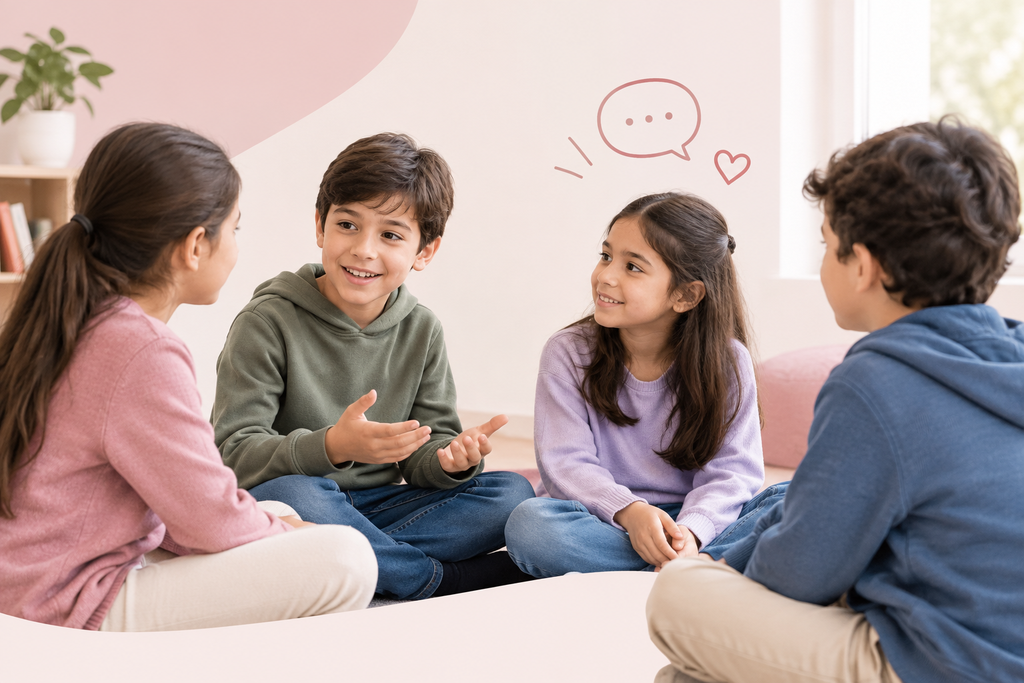
Helping Children Build Better Social Skills
Some children find friendships easy.
Others don’t.
They may interrupt conversations, struggle to share, become upset when someone disagrees with them, or simply not know how to join a group.
Sometimes parents say:
“My child wants friends, but doesn’t know how to make them.”
That doesn’t mean something is wrong with the child.
Social skills are learned skills.
Children can practise things like:
- Listening when someone else is speaking
- Taking turns
- Starting a conversation
- Asking for help
- Respecting personal space
- Handling disagreements
- Expressing feelings appropriately
- Understanding another person’s point of view
Even small improvements can make a child feel much more confident around others.
What Happens When a Child Struggles at School?
School can be a wonderful place for children, but it can also bring pressure.
Tests, homework, friendships, classroom expectations and changes in routine can sometimes feel like a lot.
A child may not tell you that they are struggling.
Instead, you might notice that they don’t want to go to school, complain of feeling unwell in the morning, become unusually quiet, or come home exhausted and irritable.
This is where school counseling can provide valuable support.
Counselling at school can give children a safe opportunity to talk about worries, relationships, emotions, academic pressure, or situations they may find difficult.
It also gives adults a chance to understand the child rather than simply reacting to the behaviour.
Teaching Children That Feelings Are Not “Bad”
One of the most useful things we can teach children is that every emotion has a purpose.
Being angry doesn’t make them a bad child.
Feeling jealous doesn’t make them selfish.
Feeling nervous doesn’t mean they are weak.
Feeling sad doesn’t mean they need to “cheer up” immediately.
The goal isn’t to stop children from experiencing difficult emotions.
The goal is to help them understand those emotions and respond to them safely.
A child can be angry without hurting someone.
They can be disappointed without giving up.
They can feel nervous and still try.
That’s emotional growth.
What Parents Can Do at Home
You don’t need to turn your home into a therapy room to support your child’s emotional wellbeing. Small changes in the way you respond can make everyday situations easier for both you and your child. When your child becomes upset, try to understand what happened before focusing on correcting the behaviour.
Paying attention to the situation, listening without immediately judging, and giving your child time to explain can help them feel understood. Instead of dismissing fears or worries, acknowledge their feelings and gently help them explore what is making them nervous or uncomfortable. You can also encourage healthy emotional regulation by recognising positive moments when your child manages frustration, takes a break, asks for help, or communicates calmly.
Consistent support at home helps children develop emotional awareness, improve communication skills, and learn healthier ways to cope with difficult emotions. Over time, these simple parenting practices can strengthen your child’s confidence and make it easier for them to express what they need.
When a Child Needs More Support
Sometimes, despite everyone’s efforts, a child continues to struggle. Perhaps their anxiety is affecting school, their anger is causing problems at home, they can’t seem to make or maintain friendships, or they have become noticeably withdrawn.
This is when professional support can be helpful. Child counselling can give children a safe and supportive space to understand their emotions, develop healthy coping strategies, build confidence, and work through challenges that may be affecting their everyday life.
If your child is finding it difficult to manage emotions, behaviour, friendships, or school-related concerns, you can learn more about our approach to child counselling and the support available for children.
Helping a Child Become More Confident
Confidence doesn’t come from telling a child, “Just be confident.”
It develops when children experience themselves handling things they once found difficult.
The child who learns to calm down after becoming angry becomes more confident in managing emotions.
The child who learns how to approach another child becomes more confident socially.
The child who learns how to handle a mistake becomes less afraid of trying again.
These may seem like small moments.
But over time, they become important life skills.
The Goal Isn’t a Child Who Never Struggles
We cannot protect children from every difficult feeling, disagreement, disappointment, or stressful day.
And we shouldn’t have to.
What we can do is give them the tools to handle those moments.
We can teach them how to recognise their emotions, communicate what they need, calm themselves when things become overwhelming, and build healthier relationships with the people around them.
Sometimes a child doesn’t need us to solve the problem for them.
They need us to teach them:
“You can handle this. And if you can’t handle it alone yet, that’s okay. I’m here to help you learn.”
That is what social emotional learning, coping skills, social skills, and supportive counselling can ultimately give a child not a life without difficult moments, but the confidence and skills to face those moments when they come.
Let’s Start a Conversation
If you have concerns about your child’s emotions, behaviour, relationships or wellbeing, you can reach out and share what you’re experiencing.